Tarot Reversals: Do You Really Need Them?
Do you really need to use Tarot reversals? Some readers love them, while others never use them. Discover what reversed Tarot cards can mean, why I personally don't normally use them, and how practice can help you find the Tarot reading style that works best for you.
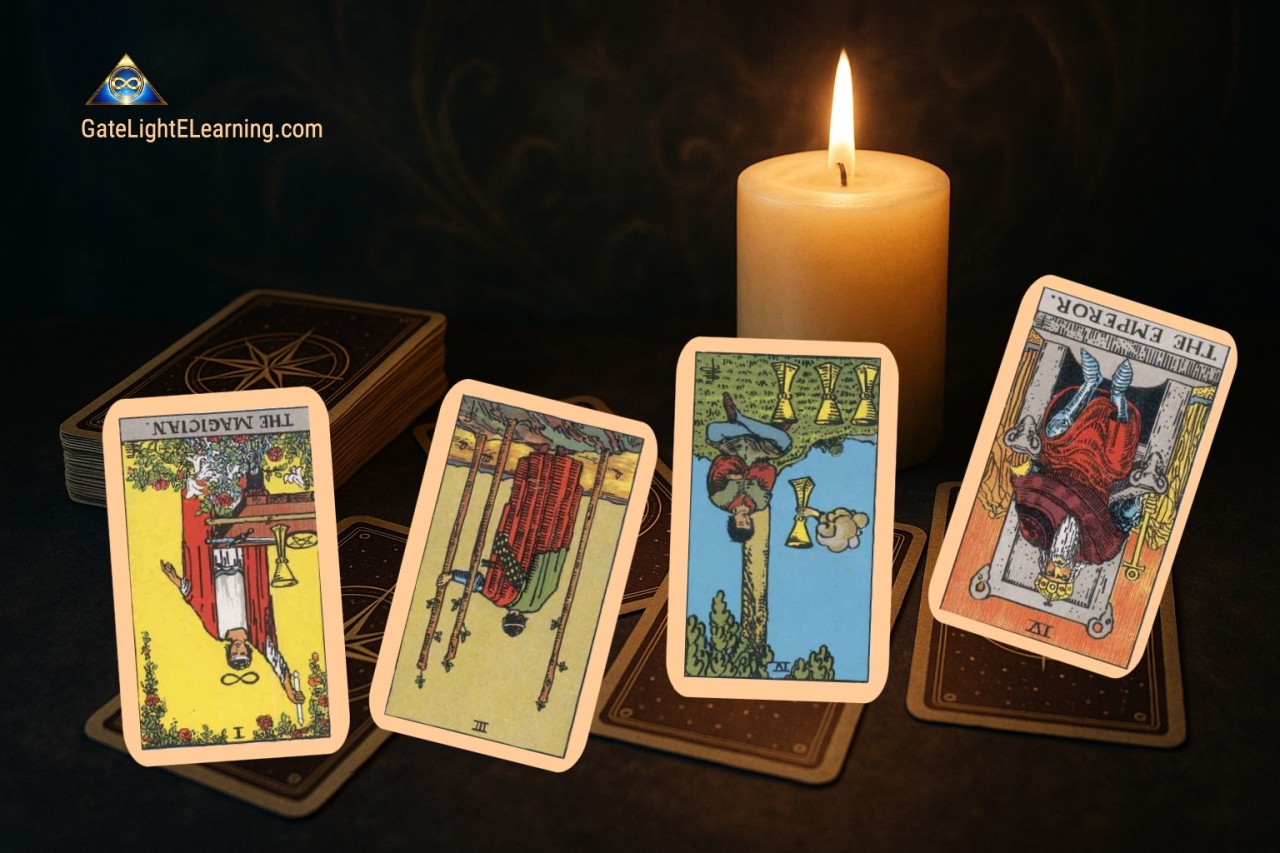
When a Card Appears Upside Down
If you are learning Tarot, sooner or later you will probably come across reversed Tarot cards.
You shuffle your deck, pull a card, turn it over…and there it is.
Upside down.
Now what?
Do you have to read it differently?
Does it mean the opposite of the upright card?
Is it automatically negative?
Do you now have to learn another meaning for every single Tarot card?
And perhaps the biggest question:
Do you actually need to use Tarot reversals at all?
The simple answer is: No.
But you absolutely can.

I personally don't normally use reversals in my Tarot readings.
Hi, my name is Daniela. I’ve been working with Tarot for many years, and I believe everyone can find their own way of reading the cards through practice.
That doesn't mean I think reversals are wrong or that you shouldn't use them. They can be very helpful for some Tarot readers.
For me, they aren't necessary.
And that's one of the things I think is important to understand when learning Tarot:
There isn't only one correct way to read the cards.
Reversals are a tool. You can experiment with them, learn from them, and then decide through your own practice whether they help you.
What Is a Reversed Tarot Card?
A reversed Tarot card is simply a card that appears upside down in your reading.
Some Tarot readers deliberately shuffle their decks in a way that allows cards to appear both upright and reversed. When a reversed card appears, they interpret it differently from the upright card.
But what does a reversal actually mean?
That's where things become interesting, because there isn't one universal rule.
A reversed Tarot card can sometimes indicate:
• blocked energy
• delayed energy
• an internal rather than external experience
• too much of the card's energy
• too little of the card's energy
• resistance
• an imbalance
• a more challenging expression of the card
• something that needs attention
And sometimes readers interpret a reversal as almost the opposite of the upright meaning.
Different Tarot readers and teachers approach reversals differently.
This is important because beginners sometimes get the impression that there is one official reversed meaning they have to memorize for every card.
There isn't.
Are Reversed Tarot Cards Negative?
This is another common misunderstanding.
A reversed Tarot card does not automatically mean something bad.
And an upright Tarot card does not automatically mean something good.
Tarot is much more nuanced than that.
Every card contains a range of possibilities.
Even cards we usually think of as very positive can have challenging expressions.
And cards that initially appear difficult can contain important lessons, opportunities, healing, change, or growth.
This is one of the reasons I don't feel that I personally need reversals to show me the "negative" side of a card.
That side is already there.
Every Tarot Card Has More Than One Side
When I learned Tarot, reversed meanings were not part of the way I was taught.
One of the things my teacher taught me was that a Tarot card is rarely simply positive or negative.
Every card represents an energy, and that energy can express itself in different ways.
Let's look at two examples.
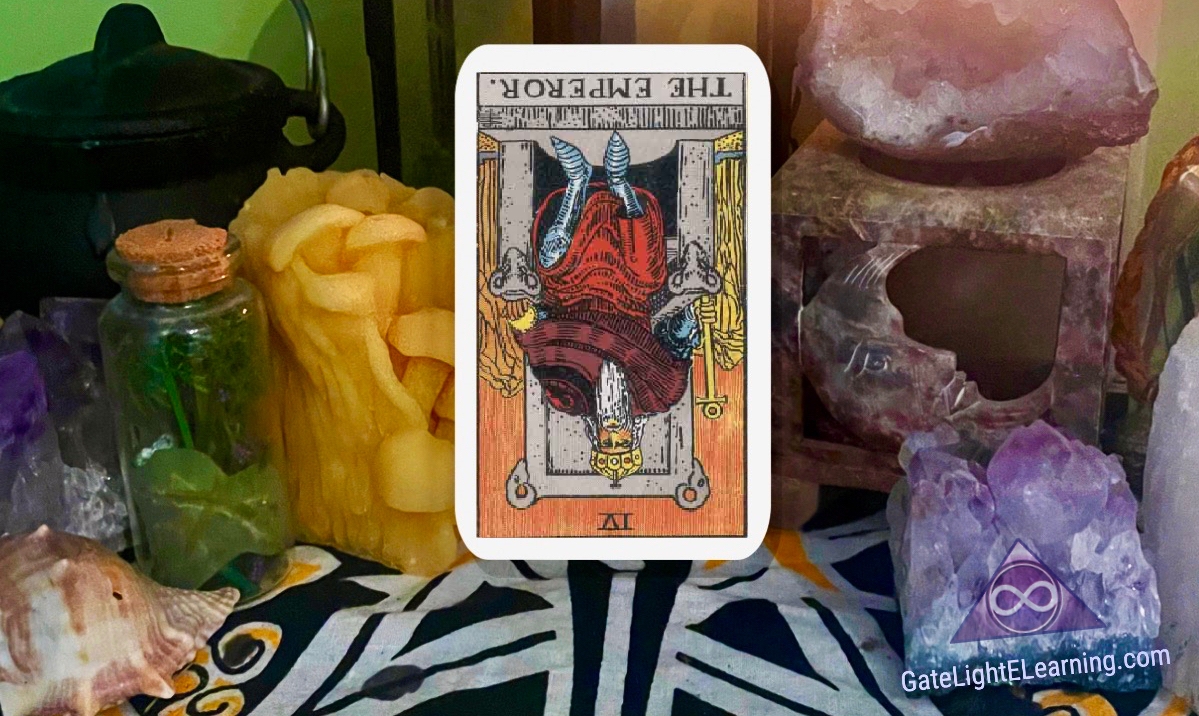
The Emperor
The Emperor can represent:
Structure, stability, leadership, responsibility, authority, discipline, and strong foundations.
These qualities can be incredibly valuable.
But what happens when that energy becomes excessive or unbalanced?
Structure can become rigidity.
Leadership can become control.
Authority can become domination.
Discipline can become inflexibility.
The Emperor hasn't suddenly become a completely different card. We are simply seeing another expression of the same energy.
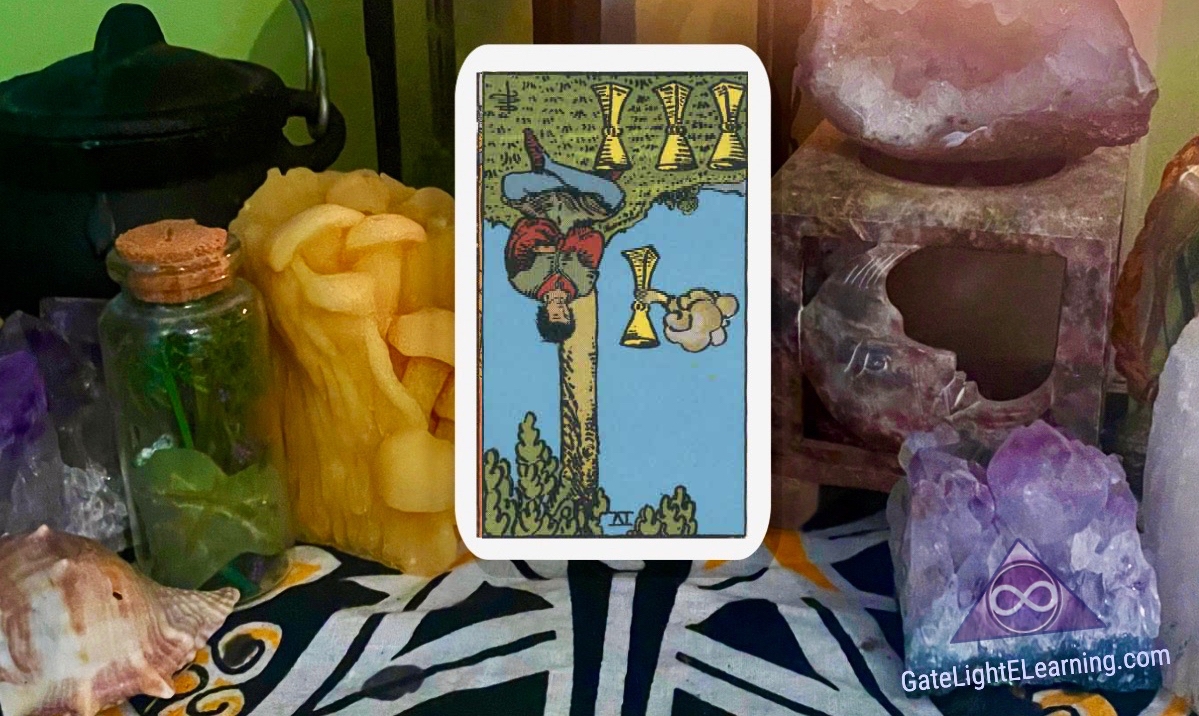
The Four of Cups
The Four of Cups can represent:
Reflection, contemplation, turning inward, taking time before making a decision, and examining how you truly feel.
Again, these aren't necessarily negative things. Sometimes we need to withdraw for a moment and reflect.
But that same energy can also become:
Disinterest, withdrawal, emotional stagnation, or focusing so strongly on what is missing that you don't notice what is available to you.
Once again, both possibilities already exist within the card. And this is where reversals can be useful.
A reversed card might give you an additional clue about which expression of the card's energy is showing itself in the reading.
For some readers, that's incredibly helpful.
For others, it isn't necessary.
Can Tarot Reversals Make Reading Easier?
Interestingly, some Tarot teachers believe reversals make reading easier.
And perhaps for some people they do.
A reversal can act almost like a little sign saying:
"Look at this card differently."
Instead of wondering which side of the card is relevant, the orientation gives the reader another piece of information.
I can understand why that could be helpful. But I experienced it differently.
For me, adding reversals didn't make Tarot easier. It made it more complicated.
Think about it. A Tarot deck already contains 78 cards.
If you approach Tarot by thinking that every card has one upright meaning and another completely separate reversed meaning, it can suddenly feel as though you have 156 meanings to learn.
Especially for a beginner, that can be overwhelming. And I don't believe it is necessary.
Why I Personally Don't Normally Use Tarot Reversals
I actually experimented with reversals for a while. I wanted to see how they felt and whether they added something to my readings.
But eventually, I stopped. Why?
They annoyed me. 😀
Instead of helping my readings flow, I felt as though I was stopping every time a reversed card appeared.
I would notice that the card was reversed and immediately start thinking about how I was supposed to interpret it differently.
For me, that interrupted something much more important: my intuition.
I felt like my intuition was being blocked because I was concentrating too much on whether the card was upright or reversed.
Once I stopped worrying about reversals, my readings flowed more naturally again.
But - and this is important- your experience might be completely different.
You might try reversals and suddenly feel that your readings make much more sense.
That's wonderful.
That is exactly why I don't believe there should be a strict rule about this.
You Don't Necessarily Need a Reversal to See the Other Side
As you become more experienced with Tarot, something interesting begins to happen.
You stop seeing each card as a single definition.
You begin to understand the card.
The question being asked gives you information.
The position of the card in the spread gives you information.
The surrounding cards give you information.
The imagery gives you information.
And your intuition gives you information.
You might pull an upright Emperor and immediately recognize that his controlling or rigid side is relevant to the situation.
You didn't need the card to appear reversed to tell you that.
The context of the reading told you. T
his is something that develops naturally through practice.
Eventually, you begin to move away from:
"Upright means this. Reversed means that."
And toward:
"What is this card telling me here?"
That is a very different way of reading Tarot.
Should Beginners Use Tarot Reversals?
If you are just beginning, my suggestion is simple:
Don't put pressure on yourself.
You don't have to decide immediately whether you are a "reversal reader" or a "non-reversal reader."
And you definitely don't have to sit down and memorize 78 additional reversed meanings before you can give a Tarot reading.
Start by getting to know your cards.
Learn the basic meanings.
Look at the pictures.
Notice the symbols.
Pay attention to how the cards make you feel.
Pull cards.
Do readings.
Practice.
That is enough. You don't need to analyze every possible expression of every card right from the beginning either.
That can become just as overwhelming as memorizing reversed meanings.
Keep it simple.
As your understanding grows, the deeper layers of the cards will begin to make more sense.
Then Experiment With Reversals
Once you feel comfortable, try them.
You don't have to make a permanent decision.
Read without reversals for a while.
Then allow reversals into your deck and see what happens.
Pay attention to your experience.
Do the reversals give you useful additional information?
Do they make the message clearer?
Do they help you distinguish between different expressions of a card?
Or do you find yourself thinking so much about the reversal that you lose the natural flow of your reading?
Maybe you'll love them.
Maybe you'll use them occasionally.
Maybe you'll decide, like me, that you normally don't need them.
Practice will tell you much more than a rule in a Tarot book ever could.
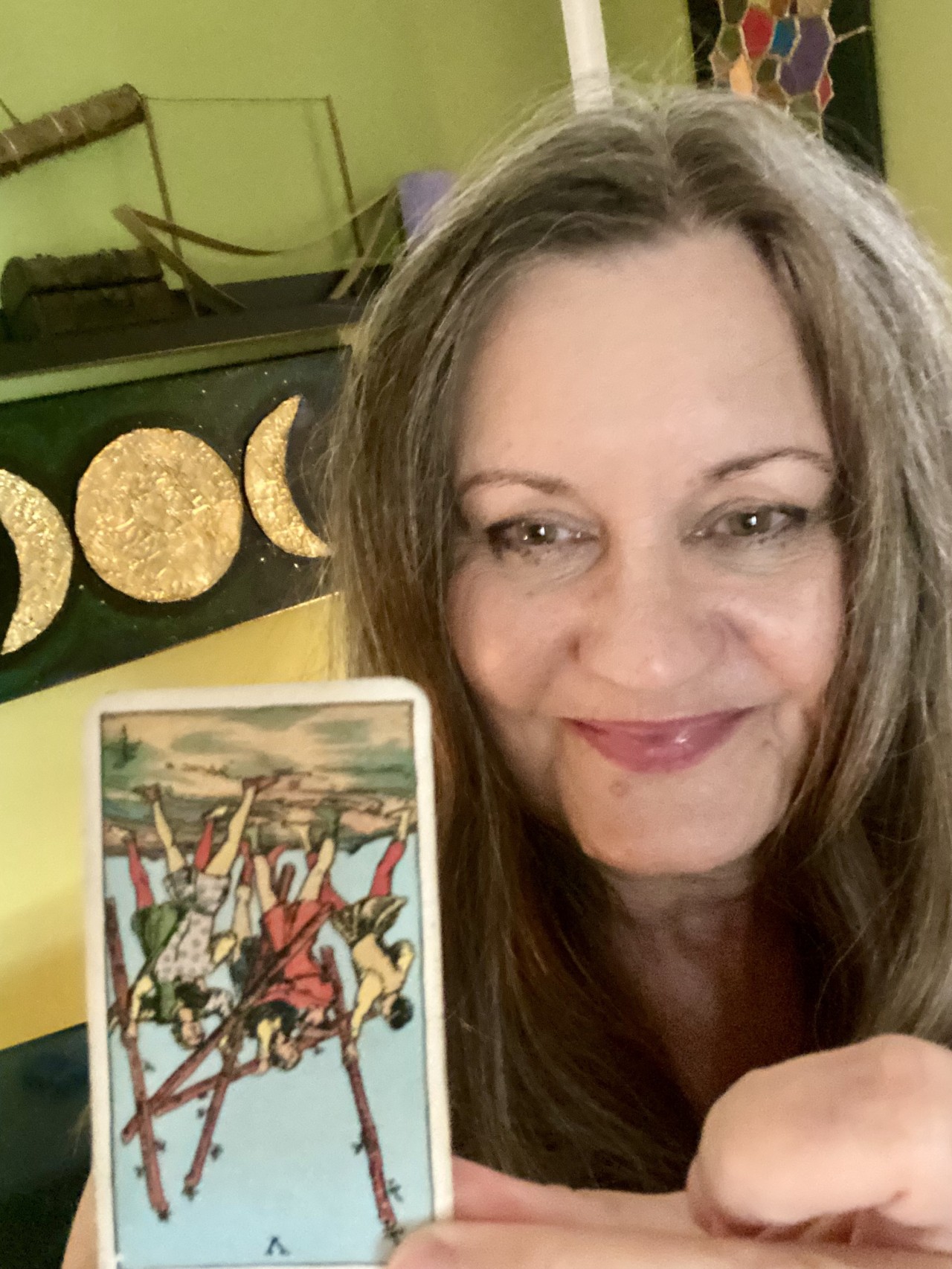
What If a Card Accidentally Comes Out Reversed?
This is another question you might have if you normally keep your Tarot cards upright.
What happens if one accidentally appears upside down?
You have choices.
ou can simply turn it upright and read it normally.
Or perhaps something inside you says: "Wait. This card came out reversed for a reason."
Then explore it.
There is nothing wrong with that either.
You don't have to create rigid rules around your Tarot practice.
Sometimes intuition asks us to pay attention to something unexpected.
Tarot Is Like Learning a New Language
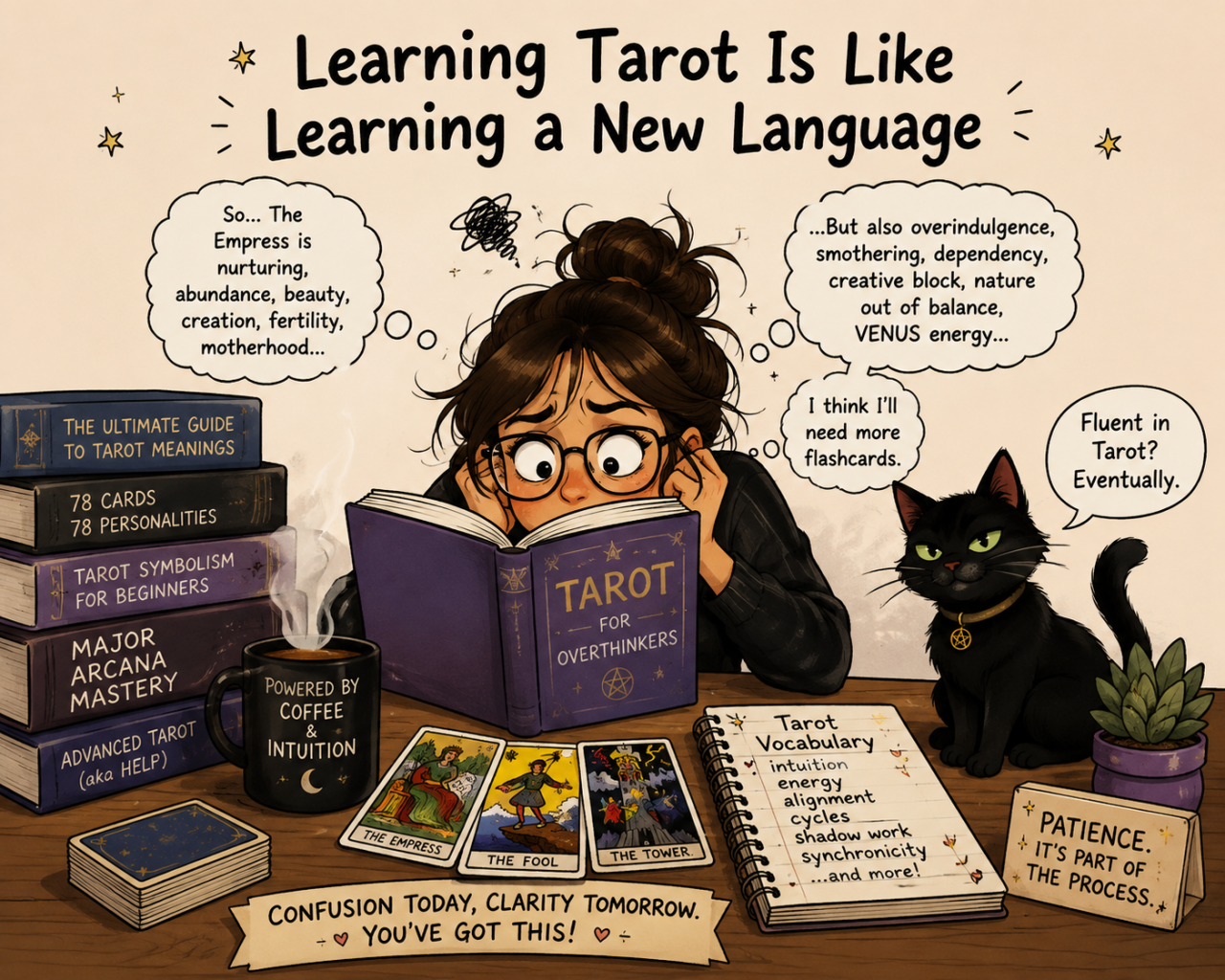
I often think learning Tarot is a little like learning a new language.
At the beginning, you need to look things up.
You need keywords.
You need explanations.
You may look at a card and think: "I know I've learned this one…what does it mean again?"
That's completely normal. But the more you practice, the more familiar the language becomes.
Eventually, you don't just remember that a particular card means "X, Y and Z."
You understand its character.
You understand its energy.
You begin to recognize how it changes depending on the question, the surrounding cards, and the situation.
Just like learning a language, you move from memorizing to understanding.
And this is where your own Tarot reading style begins to develop.
There Is No One Right Way to Read Tarot
One of the most beautiful things about Tarot is that your relationship with the cards develops over time.
You don't have to read exactly like your teacher.
You don't have to read exactly like your favourite Tarot reader.
And you don't have to follow every technique you find in a book or online.
Learn the foundations.
Experiment. Practice.
And pay attention to what actually helps you understand your readings.
Reversals are simply one of the tools available to you. They can be helpful, but they aren't always necessary.
What works beautifully for one Tarot reader may feel completely unnatural to another.
Give yourself permission to discover your own way.
Because ultimately, whether your cards are upright, reversed, or a mixture of both, the important thing isn't the direction in which the card is facing.
It's whether you understand what the card is trying to tell you.
Want to Understand Tarot Beyond Keywords?
If you are learning Tarot, seeing how the cards can show up in everyday life can make their meanings much easier to understand and remember.
In my FREE ebook, Tarot Cards in Real Life,
you'll find a simple real-life example for each of the 78 Tarot cards.
Instead of just memorizing meanings, you can begin to recognize the cards in real situations - and understand their energy more naturally.
Need a Quick Tarot Reference?
When you are learning Tarot, sometimes you don't need another long explanation.
You just need a quick reminder:
What does this card mean again?
That's why I created my:
Tarot Keywords & Daily Messages Guide.
It's a fast Tarot reference for all 78 cards with simple keywords and short daily messages - without long explanations. It's especially useful for daily card pulls or those moments when you quickly want to check the meaning of a card and continue with your reading.

The more you work with Tarot, the less it becomes about memorizing - and the more it becomes about understanding.
Thank you so much for reading this article.
I hope it helped you feel a little more confident about finding your own way of working with Tarot.
If you enjoyed this Deep Dive and would like to learn more, you can explore all of my Tarot courses and resources here.
Keep Exploring Tarot Want to read more?
Explore all my Tarot Deep Dive articles for more tips, insights, and practical ways to work with the Tarot cards.
